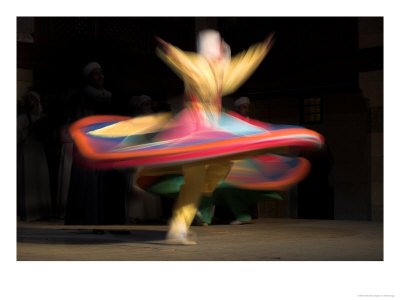
The world of mysticism- the Kabbalah in Judaism, or Gnosticism with Christianity, or Sufism in Islam, or, else, Vedanta with Hinduism, or so on- is so varied, and yet emanating perhaps the same spirit- yearning to be re-united with the Ultimate Reality through the path of love and devotion.
Rabindranath Tagore has well been acclaimed throughout the world as a mystical poet. And it has been a wonderful experience to unfold his unique pattern of making music for the much acclaimed lyrics. His compositions reflected perhaps the panorama of world mystic music pattern that, in course of time, if I am allowed to say so, glided smoothly to the path of migrating music, or, world music.
Tagore, while visiting Persia, came to acknowledge that their music had an eerie resemblance with the music of our country. And this has been a wonderful personal experience for me from the other end. The pioneering Persian mystical poet Jellal-ud-din Rumi is known worldwide as Mowlana, and his disciples are called Mevlevi or the ‘Whirling Dervishes’.
Once, a few years back, I had an opportunity to come across a compact disc- a compilation of Rumi’s poetry set in their traditional tune, sung by some Turkish artists accompanied by traditional instruments, like Nay or Aud. It was a male voice, and I was listening from a distance where only the tune could reach my ear, without making me much conscious about the Persian lyric, and letting me think at least for a while that I was listening to some Rabindrasangeet. I was confused; and I lent an eager ear only to discover something more. The prelude of one of the songs played on the Iranian flute Nay made me stand before one of Tagore’s composition from the segment called Prem, which asks the Lord what else He demands from him when He Himself has become the Beggar, and turned the poet into one also.
“Ogo kangal amare kangal korechho aro ki tomar chai…”


 Migrating Music
Leave a reply to Annalisa Biondo Cancel reply